
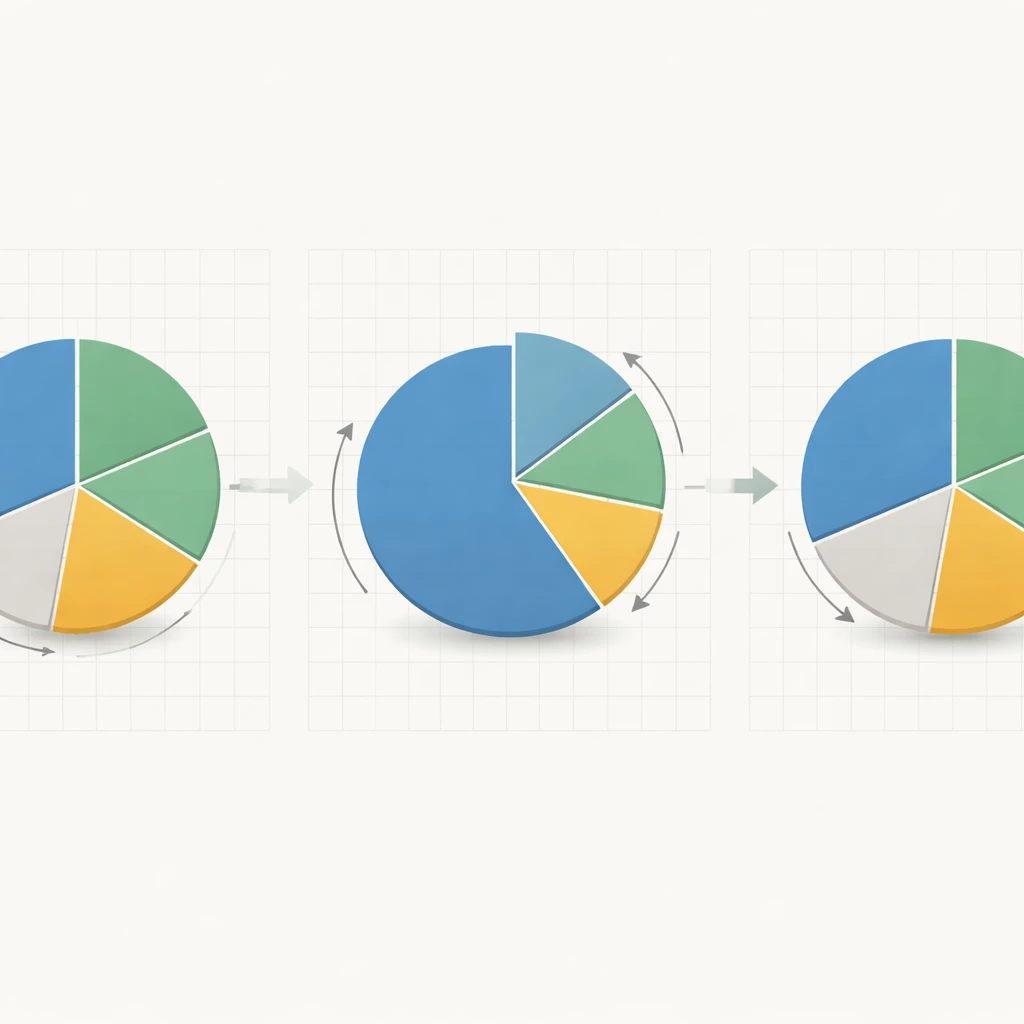
Rebalancing is a foundational mechanism in portfolio construction. It is the routine process of realigning a portfolio back to its intended mix of assets after price movements or cash flows have shifted weights. The principal objective is not to chase returns, but to maintain a defined risk profile and the exposures that underpin a long-term investment plan. Without rebalancing, a portfolio can drift toward unintended concentrations, altering its risk and potentially undermining the assumptions that informed the original allocation.
What Rebalancing Is and What It Is Not
Rebalancing refers to adjusting asset weights to restore a target or policy allocation. If an investor sets a 60 percent equity and 40 percent bond policy, equity appreciation can push the mix to 70 percent equity and 30 percent bonds. Rebalancing would reduce equities and increase bonds to return to the intended 60 and 40. This action is fundamentally about risk control and plan adherence. It is not a short-term trading tactic and it is not a guarantee of higher returns.
There are three common ways practitioners frame rebalancing:
- Calendar-based: Realign to targets at a set interval such as monthly, quarterly, or annually.
- Threshold-based: Rebalance when an asset or the total portfolio deviates from its target by more than a specified band.
- Hybrid approaches: Combine time and thresholds, or use cash flows to reduce the need for transactions.
These approaches share a single purpose. They enforce a discipline that keeps the portfolio aligned with its stated objectives while acknowledging costs, taxes, liquidity, and operational realities.
Why Rebalancing Matters at the Portfolio Level
Portfolios reflect a set of intended exposures. These include asset classes, regions, sectors, and risk factors such as value, size, momentum, or duration. When relative prices move, the mix changes. Left unattended, this drift can have several consequences:
- Risk inflation: Appreciating assets with higher volatility can dominate the portfolio, raising overall risk above the level first chosen.
- Concentration risk: One sector, region, or style can become an outsized share of total risk and return.
- Style drift: Factor tilts can shift unintentionally, muting the effectiveness of a diversified design.
- Tracking error to policy: The actual portfolio can diverge materially from its policy benchmark, complicating oversight and accountability.
The essence of portfolio construction is to choose a mix that fits the purpose of the capital and to keep the portfolio close to that design under changing market conditions. Rebalancing is the mechanism that translates a policy into day-to-day holdings. Without it, the portfolio becomes a byproduct of recent performance rather than a deliberate allocation.
Long-Horizon Planning and the Role of Discipline
Long-term plans depend on assumptions about risk, return, and correlation. A 30-year retirement plan, a university endowment policy, or a multi-decade family savings plan all rest on an expected distribution of outcomes. If the portfolio drifts into a different risk profile, those projections lose relevance. Rebalancing preserves the linkage between the plan and the assets that are meant to deliver on it.
Discipline matters especially in two contexts. The first is protracted rallies when there is a temptation to allow winners to run indefinitely. The second is drawdowns when selling winners to add to laggards can feel uncomfortable. A predefined rebalancing policy reduces the influence of these pressures by focusing on the policy mix rather than short-term narratives.
How Rebalancing Interacts with Return
Rebalancing changes the path of a portfolio even if long-run average returns remain similar. There are two key mechanisms:
- Risk targeting: By stabilizing the mix, rebalancing often stabilizes volatility. This can influence geometric returns because compounding is sensitive to volatility.
- Return from contrarian trades: Rebalancing sells relative winners and buys relative losers. If return patterns mean revert or if diversification creates independent up and down moves across assets, rebalancing can harvest a reallocation effect. If trends persist without reversal, rebalancing can lag a buy-and-hold that allows winners to accumulate.
There is no guarantee that rebalancing raises long-run returns. Its core value is risk control and adherence to a plan. Any incremental return from contrarian trades is contingent on the behavior of the underlying assets, their correlations, and the cadence of adjustments.
Illustrative Portfolio Drift and Realignment
Consider a simple global allocation with 50 percent equities, 40 percent bonds, and 10 percent cash and short-duration instruments. In a year of strong equity performance, the mix might end at 58 percent equities, 34 percent bonds, and 8 percent cash if no changes are made. The portfolio’s volatility and equity beta would typically be higher than intended. If the next year brings a sharp equity drawdown, the overexposed portfolio experiences greater losses than anticipated when the plan was designed. Rebalancing back to the 50 and 40 and 10 alignment would have restored the intended risk profile before the shock.
Now extend the example to include region and style. Suppose the equity sleeve is split between domestic and international developed markets. Domestic equities outperform for several years, rising from 60 percent of the equity sleeve to 75 percent. Without rebalancing, the portfolio becomes more concentrated in a single market’s risks such as sector composition, regulatory environment, and currency. A rebalancing step restores the regional balance, protecting the diversification benefits that motivated the initial design.
Costs, Taxes, and Practical Frictions
Rebalancing is not free. Every adjustment has a cost, whether explicit trading commissions, bid-ask spreads, market impact, or taxes in taxable accounts. The practical question is not whether to rebalance, but how to align rebalancing with a tolerance for costs and tracking error.
Three implementation tools often reduce frictions:
- Use of cash flows: Contributions and withdrawals can be directed to underweight assets or drawn from overweight assets, shrinking deviations without selling positions.
- Thresholds and ranges: Setting tolerance bands around targets can prevent small deviations from triggering trades. Wider bands lower turnover at the expense of greater drift.
- Account-aware execution: When portfolios span taxable and tax-advantaged accounts, trades can be routed toward the accounts with lower tax friction, while maintaining the aggregate allocation across all accounts.
Taxes and regulations vary by jurisdiction and investor situation. The general principle is that rebalancing policy must evaluate both the benefits of risk control and the costs of trading and taxes. There is no single correct cadence. It is shaped by volatility, correlation, liquidity, fee schedules, and the tolerance for deviation from policy weights.
Liquidity and Market Regimes
Market liquidity is not constant. During stress, spreads widen and volumes can be thin in certain instruments. A rebalancing process that functions well in normal times needs contingencies for stressed environments. For example, if equities fall sharply and fixed income rises, the policy may call for selling bonds and buying equities. Execution choices, such as using more liquid vehicles or staging trades over time, can help manage implementation risk. The goal is to restore exposures in a way that recognizes current market functioning without abandoning the policy.
In quiet markets, drift may be slower and costs lower, which often permits more frequent small trades if desired. The point is that rebalancing is not purely mechanical. It is an operational process that sits within the realities of trading and settlement.
Rebalancing and Spending or Contributions
Many portfolios have cash flows. Retirement portfolios distribute cash to fund spending, whereas accumulation-phase portfolios receive contributions. Rebalancing interacts with these flows in useful ways:
- Accumulation: Directing new contributions to underweight assets can offset drift with minimal trading.
- Decumulation: Drawing withdrawals from overweight assets can both fund spending and reduce drift.
These techniques conserve costs while maintaining alignment. They also smooth the experience by reducing the number of standalone sale and purchase decisions required to rebalance.
Rebalancing Across Asset Classes and Instruments
Portfolios today often include public equities, bonds, real assets, and sometimes alternative strategies. Each has different liquidity, valuation frequency, and cost profiles. Two practical considerations arise:
- Liquidity timing: Some assets price daily, others monthly or quarterly. The rebalancing process must respect these calendars. When private assets are present, the liquid segments often do more of the work in restoring the aggregate mix.
- Vehicle choice: Exchange-traded funds, mutual funds, individual securities, and derivatives all provide exposure with distinct characteristics. Short-term instruments or futures can be used to make small or temporary adjustments when underlying assets are less liquid, with later settlement through cash trades. The intent is to keep the total portfolio close to target while minimizing operational strain.
Attributing rebalancing effects across instruments helps risk oversight. For example, if a futures overlay is used to hold the equity weight at target, the cash allocation and collateral management need to be tracked so that the overall risk remains as intended.
Governance, Policy, and Documentation
A rebalancing policy functions best when documented. The policy typically specifies target weights, ranges or thresholds, the review cadence, the decision authority, and the instruments eligible for adjustment. It may also define how to treat significant cash events and how to operate under various market conditions. Documentation promotes consistency, assists compliance, and provides a basis for evaluating outcomes.
In an institutional context, clarity around roles is important. Investment committees approve the policy. Staff or external managers implement it. Risk teams monitor drift and tracking error. Trade execution teams evaluate liquidity and costs. Even in a small or individual context, written guidelines lower the risk of ad hoc decisions that deviate from the plan.
Case Examples in Realistic Context
A 60 and 40 policy through a market cycle
Consider a three-year period where equities rise 20 percent in year one, rise 10 percent in year two, and fall 25 percent in year three. Bonds return 4 percent, 3 percent, and 5 percent across the same years. A buy-and-hold 60 and 40 at the start of the period will see equity weights climb in the first two years, perhaps reaching 70 percent or more by the second year, followed by a larger drawdown in year three because the portfolio is more equity heavy just before the fall. A rebalancing approach that returned to 60 and 40 after year one and year two would enter year three closer to the intended risk profile, resulting in a smaller drawdown relative to the buy-and-hold path. The total return difference over the entire three years could be small, higher or lower depending on exact sequences and cost assumptions. What is robust is the reduction in unintended risk entering the downturn.
A multi-account household with taxes
Suppose a household has a taxable brokerage account and a tax-advantaged retirement account. The aggregate target is 55 percent equity, 35 percent bond, and 10 percent cash equivalents. Equities rally, pushing the total equity weight to 62 percent. Instead of selling equities in the taxable account, the household can shift the retirement account toward bonds, using contributions and internal trades to restore the combined allocation. This reduces current tax implications while aligning the whole portfolio with policy. The household still experiences portfolio-level rebalancing even though it did not sell equities in the taxable account.
An institution with illiquid assets
A foundation allocates 20 percent to private markets that are valued quarterly and are slow to transact. Public equities fall sharply during a quarter, reducing the total equity weight and raising the private allocation as a percentage of the total portfolio. The foundation increases public equity exposure with liquid instruments to offset the relative weight of privates until capital calls or distributions change the mix. The result is a total portfolio that stays close to its policy even though some components adjust only slowly.
Measuring and Monitoring Drift
Effective rebalancing relies on measurement. Two metrics are common:
- Deviation from target weights: The simplest approach is to track percentage differences for each sleeve and for the overall equity or risk bucket.
- Tracking error to a policy benchmark: For portfolios with defined benchmarks, the standard deviation of return differences indicates how far the portfolio has strayed from its policy through time. Rising tracking error can signal the need to rebalance even if weight deviations appear modest in percentage terms.
Risk reports often complement these metrics with factor exposure estimates and scenario analysis. If an equity rally has tilted the portfolio toward growth and away from value, this style drift may be detected in factor models. The rebalancing decision can then account for both asset class weights and factor exposures.
The Trade-off Between Turnover and Control
More frequent or narrower-band rebalancing holds the portfolio closer to target, reducing drift and tracking error. It also increases turnover and costs. Less frequent or wider-band rebalancing lowers trading but tolerates larger deviations from policy. This trade-off has no universal solution. It depends on the cost environment, the stability of asset correlations, the volatility of the components, and the tolerance for deviation.
One practical refinement is to prioritize large deviations or those that materially affect total risk while ignoring small ones. Another is to net trades across positions so that the number of transactions is reduced. Rebalancing through cash flows fits naturally into this philosophy by absorbing some of the adjustments without secondary trades.
Behavioral Advantages
Investors are subject to behavioral biases such as extrapolation, loss aversion, and regret. A rebalancing framework curtails the impulse to overweight recent winners in pursuit of momentum that may not persist. It also reduces hesitation to add to assets that have underperformed. By tying actions to predefined rules related to drift, the process helps maintain consistency across market moods. This behavioral benefit is often underestimated, yet it is central to sustaining a long-term plan.
Rebalancing Does Not Predict Markets
It is important to separate rebalancing from market timing. Rebalancing reacts to changes in weights that arise from price movements. It does not forecast where markets will go next. It realigns exposures to a policy that is already chosen. If the policy itself is inappropriate for the objectives or constraints, rebalancing will not fix that. The policy must be reviewed on its own merits, such as the rationale for the chosen mix, the horizon, liquidity needs, and any regulatory or tax considerations.
When Rebalancing Can Detract
In prolonged trends, a strict rebalancing discipline can lag a buy-and-hold allocation that allows a winning asset to grow as a share of the portfolio. This is not a failure of rebalancing. It is simply the other side of risk control. The intended benefit is greater alignment with the chosen risk level and less exposure to reversal at the end of a trend. Over short windows, either approach can look better or worse. Over long horizons, controlling unintended risk is the central value proposition of rebalancing.
Integrating Rebalancing With Factor and Thematic Exposures
Beyond broad asset classes, many portfolios include factor or thematic tilts. If a portfolio is designed to hold a specific allocation to value and quality equities, a differential performance can push the portfolio off these targets. Rebalancing can address this by shifting weight within the equity sleeve rather than across asset classes. Similar principles apply within fixed income where duration, credit quality, and curve exposure can drift. Maintaining these internal balances helps ensure that the portfolio expresses the intended sources of risk and return rather than those most recently rewarded by markets.
Data, Systems, and Operational Readiness
Rebalancing requires timely data, accurate positions, and an execution workflow. The process generally involves several steps. First, compute current weights and deviations from targets. Second, translate deviations into proposed trades that minimize turnover while restoring the aggregate mix. Third, review costs and taxes to decide whether to execute fully or partially. Fourth, implement and confirm the trades, and finally, document the results.
Automation can assist with monitoring and proposal generation, especially in multi-account contexts. Even so, human oversight remains essential for interpreting exceptional situations such as corporate actions, unusual liquidity conditions, and large external cash flows.
Stress Testing and Scenario Awareness
Scenario analysis can anticipate how a portfolio might drift under different market moves. For instance, a shock that raises rates and lowers equities may increase the relative weight of cash and short-duration instruments. A rebalancing plan that is stress tested can predefine how to respond to these scenarios under cost and liquidity constraints. Simulation of turnover under different bands and frequencies can also reveal the expected trading volume in various volatility regimes.
Using Benchmarks and Policy Ranges
Many institutions express rebalancing tolerance with target ranges such as equity between 55 and 65 percent around a 60 percent target. The range acts as a risk budget for drift. Wider ranges reduce turnover but increase the probability that the portfolio experiences outcomes meaningfully different from the target-risk allocation. Narrower ranges keep exposures tight but require more frequent trades. Monitoring both the percentage weights and the contribution to total risk can focus attention on the deviations that matter most.
Putting Rebalancing in Real-World Perspective
Rebalancing is sometimes misunderstood as a return-boosting tactic. Its more robust role is to keep a portfolio aligned with the objectives it was designed to achieve. When the purpose is funding obligations, preserving purchasing power, or meeting a stream of spending needs, adherence to a well-defined risk profile is essential. Markets will move through cycles of enthusiasm and stress. The portfolio will drift with those cycles unless a policy brings it back to the allocation that matches the plan. That is why rebalancing matters.
Key Takeaways
- Rebalancing is a risk and policy discipline that realigns a portfolio to its intended mix rather than an attempt to predict markets.
- Without rebalancing, drift can inflate risk, increase concentration, and weaken the link between a plan and the portfolio that underpins it.
- Any return benefit from rebalancing depends on asset behavior and is not guaranteed; the reliable benefit is control of exposures.
- Costs, taxes, liquidity, and account structure shape how rebalancing is implemented in practice.
- Documented policies, measurement of drift and tracking error, and integration with cash flows make rebalancing more effective and sustainable.