
Introduction
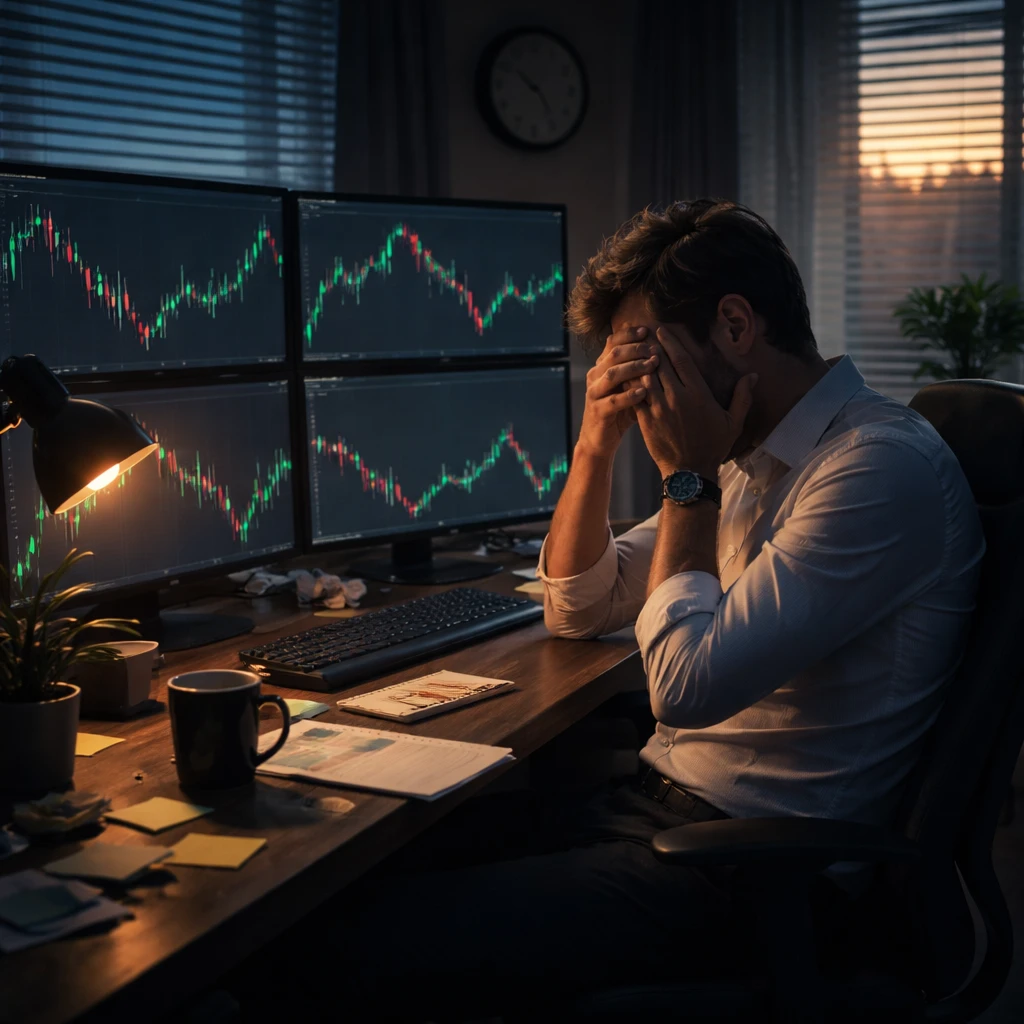
Markets demand repeated decisions under uncertainty, tight feedback loops, and constant exposure to gains and losses. Over time, those conditions can produce more than ordinary fatigue. They can generate trading burnout, a state of persistent mental and emotional depletion that erodes discipline, narrows attention, and undermines long-term performance. Understanding burnout as a psychological process rather than a temporary mood helps explain why otherwise capable market participants can drift into impulsive choices or rigid avoidance, especially during drawdowns.
This article examines trading burnout as a distinct construct. It outlines why the phenomenon matters in markets, how it alters decision-making under uncertainty, and what patterns signal deterioration of cognitive resources. Practical, mindset-oriented examples illustrate how burnout develops and how recovery can be structured at the level of habits, workload, and evaluation. The goal is to build conceptual clarity so that traders and investors can recognize the signs early and maintain sustainable engagement with the market environment.
What Is Trading Burnout?
Burnout is a chronic stress response characterized by emotional exhaustion, detachment or cynicism, and a reduced sense of efficacy. In a trading context, these features show up as diminished motivation to perform routine tasks, alienation from one’s process, and a growing belief that effort does not produce commensurate results. Unlike acute stress, which can briefly heighten alertness, burnout is a slow shift in baseline functioning. It is cumulative, often invisible to the person experiencing it, and sustained by daily routines that keep cognitive load high while reducing opportunities for recovery.
Several structural features of markets amplify the risk:
- Continuous uncertainty. Prices reflect evolving information and psychology. Outcomes are probabilistic, which complicates perceived control and prediction.
- High feedback frequency. Screen-based environments deliver minute-by-minute reinforcement or punishment. The nervous system receives more signals than it can meaningfully process.
- Social comparison. Public performance narratives and peer results can intensify pressure, even when those comparisons are irrelevant to one’s approach.
- Variable rewards. Intermittent payoff patterns are particularly sticky for attention and habit formation. They promote over-engagement beyond healthy limits.
Burnout often begins as a positive trait misapplied. Persistence becomes overwork, diligence becomes hypervigilance, and ambition becomes self-criticism. The person is not “weak” or “unmotivated.” Rather, cognitive and emotional resources are being spent faster than they are restored.
Why Burnout Matters in Markets
Burnout matters because it distorts the processes that produce consistent decision quality. Markets reward disciplined preparation, probabilistic reasoning, and the capacity to act under uncertainty without overreacting to short-term noise. Burnout interferes by narrowing attention to the most salient stimuli, biasing interpretation toward threat, and reducing working memory available for weighing alternatives. The result is a higher error rate, a greater likelihood of abandoning or over-policing rules, and a creeping disregard for reflective review.
Even in long horizons, burnout impairs performance. Investors who must synthesize macro narratives, business fundamentals, and valuation ranges rely on sustained concentration and balanced affect. Burnout increases cognitive shortcuts, such as overgeneralizing from recent outcomes or searching for confirmatory data because it is less effortful. Over months or quarters, these small distortions accumulate into material deviations from a sound process.
Decision-Making Under Uncertainty: What Changes With Burnout
When people are depleted, they do not simply make fewer decisions. They make different decisions. The following mechanisms are frequently observed in research on judgment under stress and map cleanly to trading contexts:
- Affect-driven evaluation. Under load, emotions weigh more heavily in risk appraisal. A string of losses can make neutral setups feel dangerous, while a string of wins can foster unwarranted boldness.
- Attentional narrowing. Depletion reduces the breadth of cues considered. Traders may fixate on a single indicator or headline, ignoring disconfirming information that would normally be reviewed.
- Ambiguity aversion and avoidance. When cognitive capacity is low, ambiguous choices feel costly. People either delay decisions excessively or default to whichever option minimizes immediate discomfort, not expected quality.
- Loss amplification. Burnout magnifies the psychological weight of losses. Even small setbacks feel disproportionate, leading to revenge-seeking or paralysis.
- Working memory depletion and decision fatigue. As the day progresses, each subsequent decision is made with fewer resources. Rules are enforced less consistently, reviews are shortened, and record-keeping is neglected.
These mechanisms do not imply a lack of knowledge. A trader may intellectually understand probability and risk but still act as if the environment is hostile and urgent. Burnout shifts the felt experience of the market, and behavior follows felt experience as much as it follows belief.
Stress, Drawdowns, and Psychological Recovery
Drawdowns are fertile ground for burnout. They compress attention, change goals from process excellence to damage control, and invite self-doubt. The trader’s internal narrative drifts from “follow the plan” to “get back to even.” This narrative shift is powerful because it reframes risk and time. The longer the drawdown persists, the more short-term the focus becomes, which further degrades signal quality.
Recovery is not simply a matter of returns crossing a prior peak. Psychological recovery often lags financial recovery. Even after a period of improved results, the individual can remain tentative, overly cautious, or hypervigilant. Without an intentional recovery process, the person learns the wrong lesson, namely that only extreme effort or constant monitoring can prevent future pain. That belief locks in the conditions that created burnout in the first place.
How Recovery Curves Differ
Three patterns are common after a drawdown:
- Chasing the rebound. Effort ramps beyond baseline, sleep and review time shrink, and the portfolio or watchlist is expanded beyond capacity in order to accelerate recovery. Errors rise.
- White-knuckle maintenance. The trader continues to participate but with chronic tension, frequent second-guessing, and a low threshold for exiting decisions prematurely.
- Avoidance drift. Participation decreases, research becomes sporadic, and small setbacks trigger long breaks. The person remains psychologically in the market without doing the work that restores confidence.
These are understandable adaptations, but they preserve burnout. Sustainable recovery requires normalization of workload and the restoration of reflective routines, not a heroic sprint.
The Burnout Cycle in Market Work
A typical cycle looks like this: prolonged effort and high vigilance, a drawdown or series of frustrating outcomes, increased time on screens to regain control, compression of rest and reflection, more reactive choices, further deterioration in results, rising self-criticism, and social withdrawal. Each loop strips away bandwidth for planning and perspective. The person survives the day but loses the thread of a coherent process.
Breaking the cycle involves disrupting the link between pain and overcompensation. When losses or uncertainty trigger additional workload rather than thoughtful review, burnout deepens. The target is not to eliminate stress. The target is to regulate the dose of stress and intentionally schedule the behaviors that restore cognitive flexibility.
Behavioral Signatures of Trading Burnout
Burnout is easier to address when it is recognized early. The following patterns are common at the desk and in daily routines:
- Compulsive screen-checking outside defined hours and difficulty disengaging from price updates.
- Shortened or skipped preparation and review, especially on days following poor results.
- Oscillation between micromanagement and neglect, with rapid shifts in rules mid-decision.
- Increased irritability, defensiveness about feedback, or avoidance of collaboration.
- Somatic markers such as sleep disruption, appetite changes, and persistent fatigue that outlast market hours.
- Overreliance on new tools or data streams as a substitute for rest and deliberate practice.
None of these signs alone proves burnout, but their clustering over weeks is informative. They indicate that the process is being driven by distress management rather than by a clear framework.
Healthy Challenge Versus Burnout
Markets are demanding and novelty is part of the work. A productive level of stress can sharpen focus and accelerate learning. Burnout involves a different profile. In healthy challenge, effort leads to progress, and recovery periods are respected. In burnout, effort loses traction, and recovery is sacrificed for more effort. The difference is not intensity, it is sustainability.
A useful mental model is the inverted U between arousal and performance. Performance improves as arousal rises from low to moderate levels, then declines as arousal becomes excessive. Burnout places the person on the far side of the curve, where more pressure reduces decision quality. Working longer or watching more feeds does not restore the optimal zone because the underlying limitation is bandwidth, not information scarcity.
Practical Mindset Examples
Example 1: The Intraday Operator in a Prolonged Slump
An intraday operator experiences a three-week stretch of inconsistent outcomes. In response, they extend their screen time into the evenings, add multiple ancillary data sources, and compress breaks. Initially this creates a sense of control, but the additional inputs amplify noise. Decisions become reactive, with premature exits and late entries relative to the person’s own criteria. Journaling drops because there is no time. The slump continues, and self-criticism increases. Burnout is not the drawdown itself, it is the cumulative cost of the chosen response to it.
Example 2: The Multi-Week Investor in a Regime Shift
An investor focused on multi-week horizons faces a regime change in volatility, which reduces the reliability of previously favored signals. Rather than recalibrating expectations and workload, they try to maintain prior productivity by following more names and scanning more hours. Meetings with peers are skipped to reserve time for screens. Decision quality deteriorates, not because the thesis work is wrong, but because cognitive slack has vanished. The person is working harder while seeing less.
Example 3: The Research Analyst in a News-Dense Period
A research analyst tracks a sector during an earnings cluster. Notifications multiply. The analyst attempts to digest each headline in real time, fragmenting attention. Even outside market hours, the phone remains active. Sleep shortens, minor errors creep into models, and confidence drops. The analyst has not lost skill. The system has lost recovery.
Assessing Burnout Without Pathologizing Normal Stress
Not every tough week is burnout. Practical assessment focuses on trends rather than isolated days:
- Mood and energy logs. Brief daily ratings of energy, focus, and irritability provide a baseline. A persistent downward drift signals rising load.
- Decision quality review. Instead of outcome-based grading, review whether decisions were made according to pre-defined steps. Rising deviation from one’s own process is an early indicator.
- Bandwidth budgeting. Estimate daily decision capacity and compare it to the number of significant choices made. If the count consistently exceeds capacity, degradation is likely.
- A versus B day test. Alternate days with normal inputs and days with restricted inputs. If restricted-input days lead to clearer reasoning and less fatigue, overload is part of the problem.
These tools are descriptive, not diagnostic. They help distinguish temporary pressure from a chronic pattern that warrants adjustment of workload and routines.
Structuring Recovery Without Strategy Prescriptions
Recovery is a design problem. The human system needs periods of high engagement balanced with periods of restoration. In markets, restoration is often sacrificed because the environment is always open somewhere and information feels perishable. A sustainable recovery plan attends to the following domains:
Time boundaries. Define start and stop times for market work and respect them. Off-hours become true recovery periods rather than lighter versions of work. The aim is to protect a non-market identity that supplies perspective and resilience.
Decision load management. Reduce the number of decisions per day to match cognitive capacity. This can be done by limiting the number of instruments monitored, consolidating checklists, or spacing review tasks across the week. The emphasis is on total load, not on altering market exposure.
Deliberate pauses. Embed brief, regular pauses during the session to reset attention. Short breaks that involve leaving the desk improve subsequent working memory more than passive screen-gazing. Pauses are especially valuable after outcomes that carry emotional weight.
Sleep and physiological basics. Adequate sleep, hydration, movement, and nutrition are not generic wellness slogans. They are the foundation of cognitive control, error monitoring, and emotional regulation. Without them, even excellent frameworks are executed poorly.
Reflection rituals. A short, consistent closeout routine that documents what was planned, what occurred, and what was learned supports metacognition. It reduces rumination by giving the mind a structured outlet for evaluation.
Social calibration. Regular conversations with trusted peers can normalize setbacks and provide perspective. Isolation tends to magnify self-criticism and narrows the perceived option set.
None of these elements prescribes a strategy. They shape the conditions under which any strategy is more likely to be applied faithfully and evaluated fairly.
Working Through Drawdowns Without Overcorrecting
Drawdowns tempt dramatic changes in process and identity. The person either tightens every rule instantly or discards them entirely. Neither reaction is inherently rational when driven by distress. A steadier approach treats the drawdown as a sample of outcomes to be studied with the same care as profits. The aim is to parse signal from noise, identify which errors were cognitive versus procedural, and right-size the response.
Practical steps include writing a narrative of the drawdown from a third-person perspective, noting context, decisions, and emotional states; cataloging deviations from one’s own process separately from adverse outcomes that still met criteria; and defining what information would have genuinely changed the decision in real time. This restores a sense of agency without relying on intensity.
Organizational and Team Considerations
For teams and desks, burnout management is a culture problem as much as an individual one. Norms that equate long hours with commitment push members into chronic overextension. Effective teams clarify expected inputs, protect review time, and rotate coverage during high-intensity periods. They also value error reporting without stigma. When individuals can surface small mistakes early, the cumulative cognitive load of concealment and self-criticism drops significantly.
Leaders benefit from monitoring systemic signals such as rising after-hours activity, an increase in reactive messaging, or the disappearance of debriefs from calendars. These are early markers of load mismatch that can be addressed with workload redistribution and explicit scheduling of recovery periods following major events.
Identity, Meaning, and Sustainable Participation
Many market participants link self-worth to recent performance. During drawdowns, this linkage intensifies stress and accelerates burnout. A more sustainable stance places identity in the quality of preparation, learning, and integrity of execution rather than in short-term results. The person is engaged with markets but not defined by each outcome. This separation reduces the urge to overcompensate after setbacks and creates space for deliberate recovery.
Values clarification helps here. When the work is aligned with broader personal values such as mastery, curiosity, or stewardship of capital, daily fluctuations have less power to destabilize motivation. Routines that reflect those values anchor behavior during volatile periods.
When Professional Support Is Appropriate
There are times when burnout overlaps with anxiety, depressive symptoms, or other health concerns. Persistent sleep disruption, loss of interest in previously meaningful activities, and thoughts of hopelessness warrant attention from qualified professionals. Seeking support is not a concession of weakness. It is a pragmatic step to restore cognitive and emotional capacity for demanding work. Market competence rests on a healthy mind and body.
Measuring Progress During Recovery
Recovery should be observable. Useful markers include steadier adherence to one’s process, fewer reactive deviations after emotionally charged outcomes, a return of curiosity in research tasks, and improved sleep regularity. Outcome volatility may persist because markets remain uncertain, but decision quality becomes less variable. The person experiences setbacks without spiraling into self-attack or compensatory overwork. Confidence rebuilds as a byproduct of consistent behavior rather than as a response to a single good day.
Closing Perspective
Trading burnout is not a character flaw and not a permanent condition. It is a predictable response to sustained uncertainty, high feedback frequency, and insufficient recovery. Left unaddressed, it degrades discipline and decision quality even in skilled practitioners. Addressed directly, it becomes a catalyst for designing a more sustainable way of engaging the market. The central task is to manage the ecology of work and rest so that knowledge and skill can express themselves reliably over time.
Key Takeaways
- Burnout in markets reflects chronic overload, not a lack of motivation, and it erodes discipline and decision quality.
- Drawdowns amplify burnout risk by shifting focus from process to urgent recovery and by compressing recovery routines.
- Depletion alters decision mechanisms, increasing affect-driven choices, attentional narrowing, and avoidance of ambiguity.
- Recovery requires managing decision load, restoring boundaries and reflection rituals, and protecting non-market identity.
- Progress is seen in steadier process adherence and reduced reactivity, not only in immediate performance metrics.