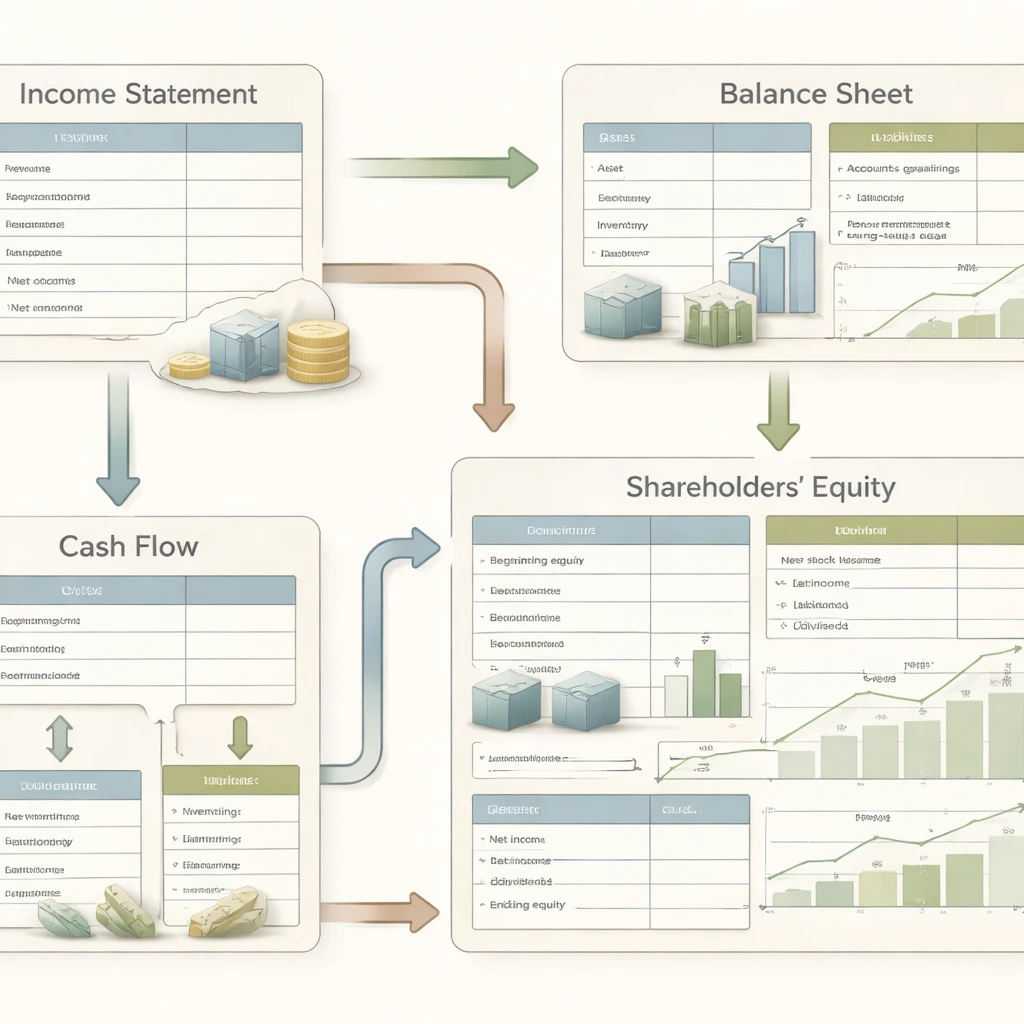
Financial Statements

Reading and understanding income statements, balance sheets, and cash flow statements.

Part of Fundamental Analysis

What you will learn

This scope is designed to help you build a practical understanding of Financial Statements. Lessons move from core definitions to real-world context and common failure points.

Lessons

Reading in order is recommended, but each lesson stands on its own.

14 min read
Intermediate

What Are Financial Statements?

Financial statements are standardized reports that summarize a company’s financial performance, position, and cash flows. This article explains what they are, how they interrelate, and why they are central to fundamental analysis and long-term valuation.


10 min read
Beginner

Income Statement Explained

A clear, structured guide to the income statement, how it is constructed, and why it matters in fundamental analysis and long-term valuation. The article explains key line items, the role of accounting choices, margin analysis, and the connection from earnings to intrinsic value.

12 min read
Intermediate

Balance Sheet Explained

A rigorous explanation of the balance sheet for fundamental analysis. Understand what it reports, how to read its components, and how analysts use it to evaluate the durability of a business and the intrinsic value of its assets and obligations over the long term.

12 min read
Intermediate

Revenue vs Profit

A clear explanation of how revenue differs from profit, how the two metrics connect through the income statement, and why the distinction matters for fundamental analysis and long-term valuation of businesses and other assets tied to operating performance.

12 min read
Intermediate

Assets, Liabilities, and Equity

A clear, structured explanation of assets, liabilities, and equity, how they appear on the balance sheet, and why they matter for assessing long-term value in fundamental analysis. Includes definitions, measurement issues, and practical examples from market contexts.

12 min read
Intermediate

Operating vs Free Cash Flow

A rigorous explanation of operating cash flow and free cash flow, how they differ, how each is used in fundamental analysis, and why the distinction matters for long-term valuation and intrinsic value assessments, with practical examples and cautions on interpretation.

12 min read
Intermediate

Cash Flow Statement Explained

A clear, professor-level explanation of the cash flow statement, how it connects to intrinsic value, and how analysts interpret operating, investing, and financing cash flows to assess the durability of a business model and the quality of earnings over time.

12 min read
Intermediate

Why Cash Flow Matters

Cash flow anchors intrinsic value because it measures the cash a business actually generates and can reinvest or return to capital providers. This article explains how operating, investing, and financing cash flows connect to valuation, how free cash flow is derived, and how analysts interpret cash flow quality across industries and cycles.

12 min read
Intermediate

Reading Financial Statements Together

A structured guide to reading the income statement, balance sheet, cash flow statement, and statement of shareholders’ equity as an integrated set to evaluate economic performance and understand intrinsic value drivers over time.','content':'Fundamental analysis relies on more than individual line items or a single accounting period. Reading financ…

12 min read
Intermediate

Accounting Assumptions Explained

A clear guide to the core accounting assumptions that shape financial statements and why they matter for fundamental analysis and long-term valuation of businesses and assets. Learn how going concern, accrual basis, monetary unit, economic entity, and periodicity influence reported earnings, book values, and cash flows.