
Fundamental Analysis
Evaluating the intrinsic value of assets by analyzing financial statements, earnings, macroeconomic forces, business models, and long-term growth drivers.
You will learn: The core concepts in this topic, common misconceptions, and how professionals think about the subject.
Educational content only. Not financial advice.
What you will get from this topic
- Clear definitions and real-world context
- Practical examples without trade recommendations
- Common mistakes to avoid
- A progression from basics to deeper understanding
Scopes in Fundamental Analysis
Financial Statements
Reading and understanding income statements, balance sheets, and cash flow statements.
Explore ScopeEarnings & Valuation
Analyzing earnings reports, valuation metrics, and growth expectations.
Explore ScopeBusiness Models & Moats
Evaluating competitive advantages, scalability, and sustainability.
Explore ScopeNews, Narrative & Sentiment
How news flow, narratives, and sentiment impact asset prices.
Explore ScopePopular in Fundamental Analysis

What Are Financial Statements?
Financial statements are standardized reports that summarize a company’s financial performance, position, and cash flows. This article explains what they are, how they interrelate, and why they are central to fundamental analysis and long-term valuation.

Income Statement Explained
A clear, structured guide to the income statement, how it is constructed, and why it matters in fundamental analysis and long-term valuation. The article explains key line items, the role of accounting choices, margin analysis, and the connection from earnings to intrinsic value.

Balance Sheet Explained
A rigorous explanation of the balance sheet for fundamental analysis. Understand what it reports, how to read its components, and how analysts use it to evaluate the durability of a business and the intrinsic value of its assets and obligations over the long term.

Revenue vs Profit
A clear explanation of how revenue differs from profit, how the two metrics connect through the income statement, and why the distinction matters for fundamental analysis and long-term valuation of businesses and other assets tied to operating performance.

Assets, Liabilities, and Equity
A clear, structured explanation of assets, liabilities, and equity, how they appear on the balance sheet, and why they matter for assessing long-term value in fundamental analysis. Includes definitions, measurement issues, and practical examples from market contexts.
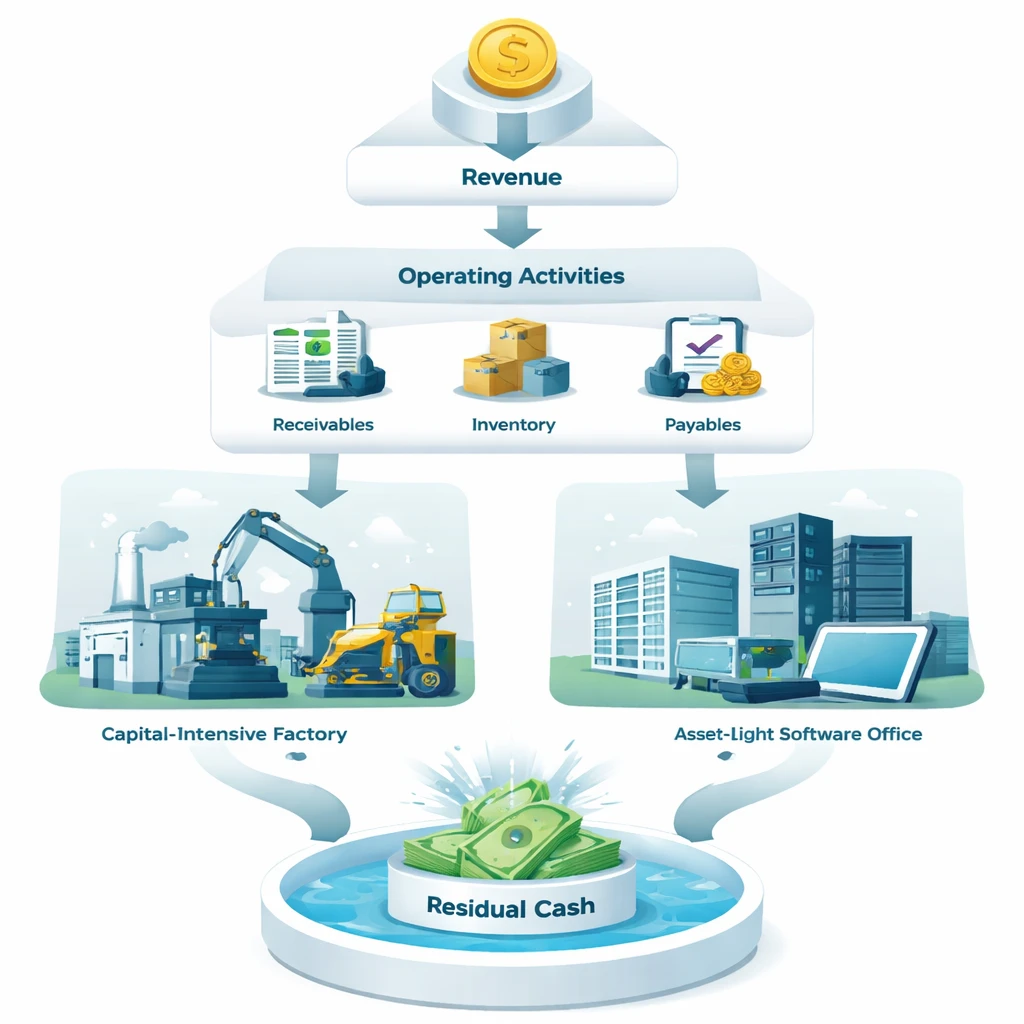
Operating vs Free Cash Flow
A rigorous explanation of operating cash flow and free cash flow, how they differ, how each is used in fundamental analysis, and why the distinction matters for long-term valuation and intrinsic value assessments, with practical examples and cautions on interpretation.
Ready to begin?
Start with the first scope to build a clean foundation, then move forward in order.
Start Financial Statements